
Chat activity graph
The vod.ing graph, where chat tells you where the clips are
The chat activity graph is the heart of the editor. It sits where a normal video player would put the scrubber, and shows how active chat was across the whole VoD. Tall bars usually mean something happened on stream. The graph is the single most useful tool in vod.ing if your editing style allows you to clip reactively.
Basics
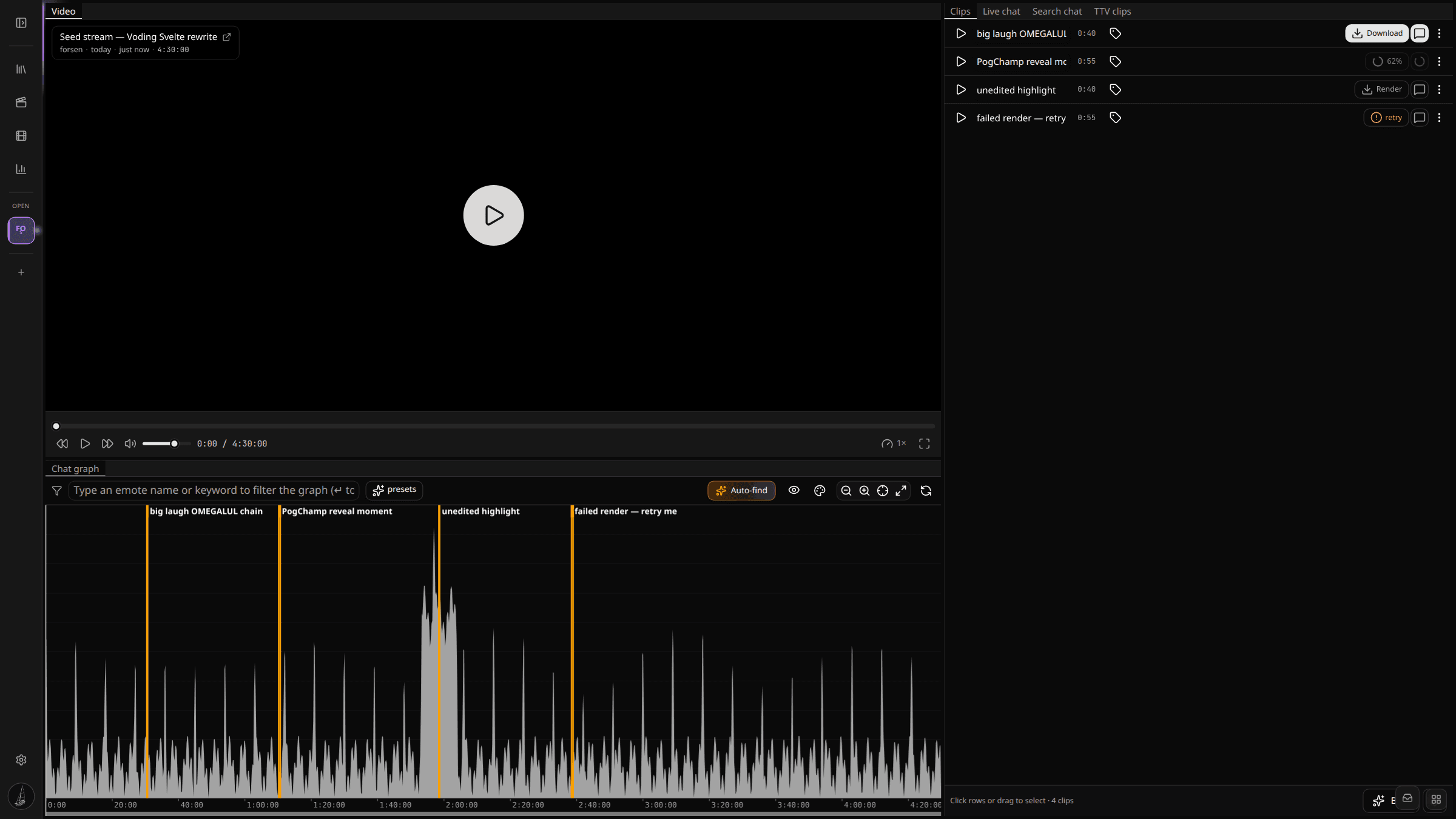
The graph plots chat activity for the open VoD.
About the data
- The horizontal axis is time, mapped to the full VoD length.
- The vertical axis is messages per second.
- Each bar bucket aggregates a short window of chat so the graph stays readable on long streams.
Default view
When you open a VoD, the graph loads the full chat as messages per second, unfiltered. This is enough on its own to spot the loud moments. Existing clips are overlaid as coloured brackets so you can see at a glance which peaks you have already covered.
Actions
- Click on the graph to seek the player to that point in the VoD.
- Click and drag across a range to create a clip. The clip opens in the Clips tab for naming, tagging, and trimming.
- Scroll-wheel zooms; shift-scroll pans. The toolbar's zoom buttons are equivalent.
Zooming for precision clipping
Zooming in turns the graph into a precision instrument. At full zoom-out a 6-hour VoD compresses into roughly 800 pixels; at full zoom-in you can see individual seconds.
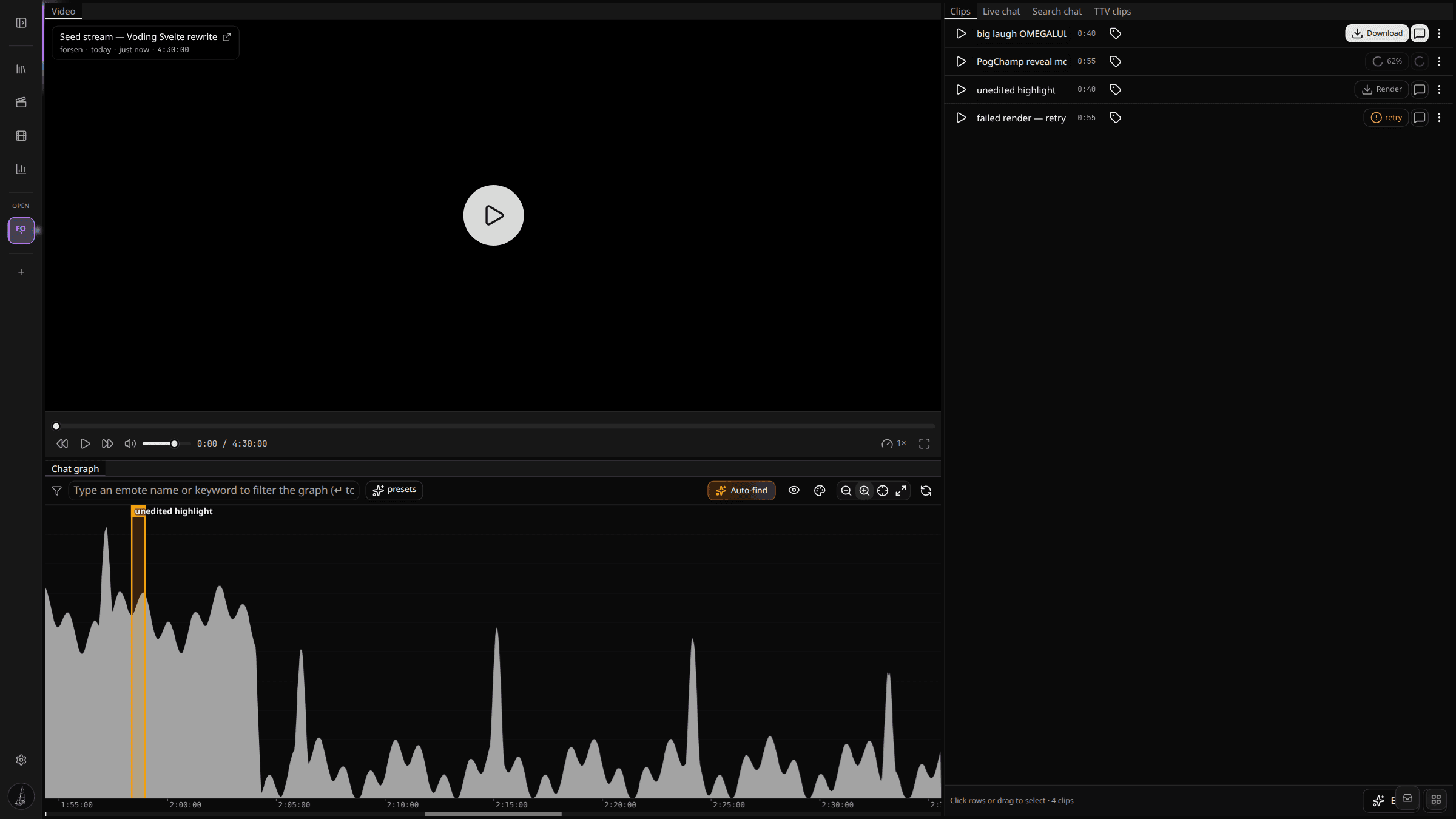
When zoomed, the clip brackets keep their label so you always know which clip a peak belongs to. The graph remembers its zoom per VoD in localStorage, so re-opening the same VoD picks up where you left off.
Styling the graph
Right-click the graph (or use the palette icon in the toolbar) to open the Graph style panel. You can change:
- Render mode — bars, area, line, or heatmap.
- The colour of the bars, the baseline, the playhead, and the clip overlays.
- Smoothing — a sliding-window kernel that takes the edge off second-by-second jitter on busy streams.
- Whether to show or hide auto-find suggestions, clip shapes (full bracket, in/out only), and chapter dividers.
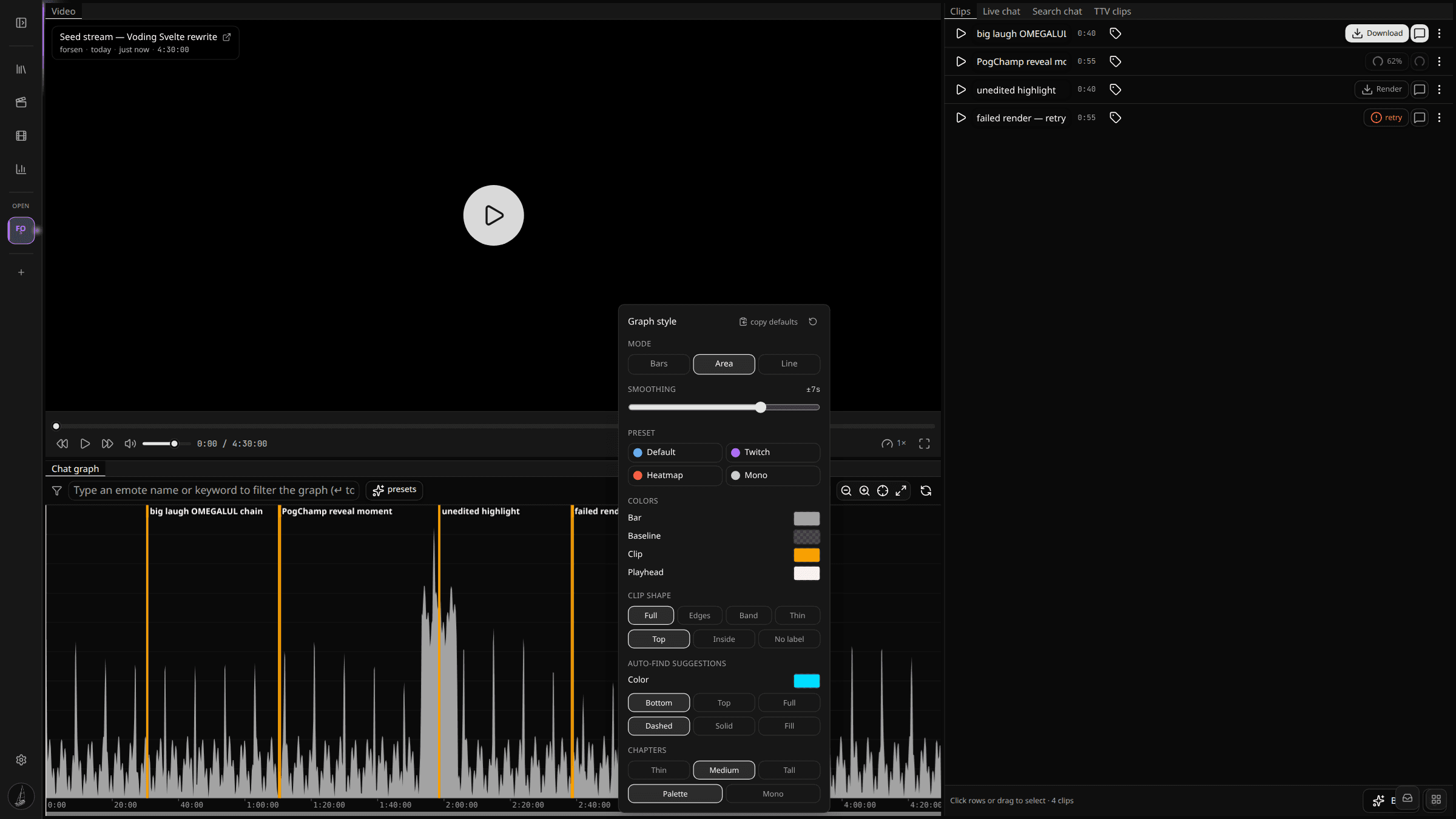
Your style picks are persisted to your account, not the browser, so they follow you across machines.
Filters
The unfiltered graph shows every message. Often you want to know where the loud moments of a specific kind were, not just where chat was active. That is what filters are for.
Filters work on two things at once: any word in chat, and any emote that we have synced for the streamer. Vod.ing loads emotes from five sources for the open channel:
- Twitch global emotes.
- Twitch channel emotes.
- 7TV channel and global emotes.
- BTTV channel and global emotes.
- FFZ channel and global emotes.
You can stack multiple filters in one query. The graph re-renders showing only messages that match at least one of the selected tokens. A few common combos:
KEKWplusOMEGALUL— laughter spikes.monkaSplusPauseChamp— tense moments.POGplusGIGACHADplusEZ Clap— hype and big plays.
A handful of preset chips are exposed for one-click application. If an emote you want is not in the dropdown, our system has not synced it yet for that streamer — you can still filter for it as a raw word.
Auto-find
The Auto-find button in the toolbar runs a statistical pass over the current graph (filters included) and drops markers on every spike that is statistically out of distribution. It is the fastest way to pre-cut a VoD you have never watched: filter to a couple of emotes, click Auto-find, and scrub through whichever bars it surfaced.
Auto-find is a hint, not a clipper. It plots suggestions; you still drag the brackets and name the clip.